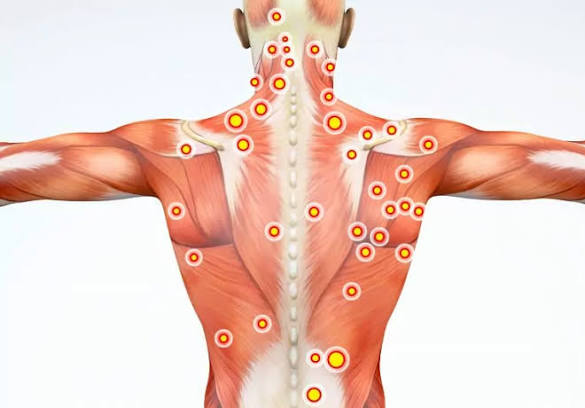
At some point, you’ve probably said something like, “I have a knot in my shoulder,” or “My hip feels tight no matter what I do.” Nine times out of ten, what you’re dealing with is a trigger point.
A trigger point is a small, localized area of muscle tissue that’s stuck in a contracted state. Instead of fully relaxing after use, the muscle fibers stay “on,” which limits blood flow and creates irritation. That’s why trigger points often feel tender, stiff, or painful when you press on them– and why they can cause pain somewhere else entirely (fun fact: trigger points love to cause referred pain).
So, how does a trigger point show up in the first place? Poor posture, repetitive movements, stress, lack of movement, overtraining, or even sitting too long can all contribute. Basically, modern life sets the perfect stage for them.
How to Release Trigger Points on Your Own
The good news is you don’t need fancy equipment or weekly massage appointments to get relief. A little consistency goes a long way.
1. Direct Pressure
This is the simplest and most effective method. Using a tennis ball, lacrosse ball, or your thumb, apply gentle but firm pressure directly to the sore spot. Hold that pressure for 20–60 seconds while breathing slowly. The goal isn’t to “smash” the muscle; it’s to let it relax.
2. Slow Rolling
Foam rollers and balls work well here. Slowly roll over the area until you find a tender spot, then pause and let your body settle. If you’re holding your breath or tensing up, you’re doing too much.
3. Move Through Range of Motion
Once the area feels less sensitive, gently move the joint through its available range. This helps retrain the muscle to function normally and improves blood flow to the tissue.
4. Change the Input
If trigger points keep coming back, look at what’s causing them. Adjust your posture, vary your training, take movement breaks during the day, and prioritize recovery. Releasing the knot is helpful, but fixing the root cause is where long-term relief happens.
Trigger points are your body’s way of waving a little red flag. Pay attention, address them early, and your muscles will move better, feel better, and stop yelling at you for help.