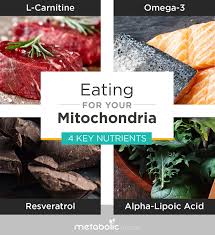
Inside every cell in your body live tiny structures called mitochondria. Their job is to produce Adenosine Triphosphate (ATP)– the energy that fuels movement, recovery, immune function, and mental clarity.
When mitochondria are strong and efficient, your body performs at a high level. When they are stressed or damaged, energy drops, recovery slows, and long-term health can suffer. Poor mitochondrial function has been linked to conditions such as type 2 diabetes and metabolic disease.
Unfortunately, many modern habits work against these vital systems. Diets high in added sugar and processed carbohydrates, low protein intake, and constant high-intensity training without proper recovery create chronic metabolic stress. Over time, this makes it harder for your body to produce clean, efficient energy.
On the other hand, prioritizing whole-food sources of protein and healthy fats, along with natural carbohydrates from fruits and vegetables, supports healthy energy production. But nutrition is only part of the equation.
How you train matters just as much.
Your muscles are made up of different fiber types that exist along a continuum from slow to fast.
Slowest → Slower → Slow → Fast → Faster → Fastest
- Slow-twitch fibers rely heavily on oxygen, produce lower force, and have high endurance. They support aerobic activity.
- Fast-twitch fibers rely more on glucose, produce high force, and fatigue quickly. They support anaerobic activity.
Your body recruits these fibers from slowest to fastest based on how much force is required. Easy movements use mostly slow fibers. Explosive movements recruit fast fibers.
This means whether an activity is “aerobic” or “anaerobic” depends largely on which muscle fibers are being used.
Energy systems do not work in isolation. Aerobic and anaerobic pathways always overlap, with dominance shifting based on intensity and fatigue. As fibers tire, the body recruits additional fast-twitch fibers, increasing metabolic stress and accelerating exhaustion.
This is where many traditional training programs fall short.
Anti-Glycolytic Training (AGT), aka the “Anti-aging” fountain of youth, is a type of training that uses short, high-output efforts followed by full recovery rather than training in a constantly fatigued state. This approach stimulates ATP regeneration pathways and strengthens mitochondrial function without excessive breakdown.
Over time, this leads to:
Faster energy production
Improved power output
Better endurance
Reduced fatigue
Faster recovery
AGT teaches the body to generate high performance without relying heavily on sugar-based metabolism. This is why athletes often experience rapid improvements in strength and conditioning without excessive volume or chronic cardio.
Properly applied, this style of training improves both the strength of slow fibers and the aerobic capacity of fast fibers, creating a more efficient and resilient energy system.
Examples of AGT Session
- “Every minute on the Minute” (EMOM)
10 KB swings at the top of each minute. Rest until the next minute begins. - Power Repeats
15-20 seconds of maximum effort followed by a FULL rest (e.g., bike sprint, rest until HR drops below 120). - Power Circuit
A series of 5 exercises performed for 15 seconds each, with 20-second breaks between them, followed by a 60-second rest at the end of the series (e.g., jump rope, ball slam, mountain climber, skipping, heavy bag drag)
Train Smart
One important consideration is that AGT requires a foundation of strength and conditioning. Without it, athletes cannot generate enough power or recover efficiently.
This method is most effective for individuals who already have basic strength, mobility, and work capacity.
When applied correctly, AGT allows you to train hard without burning out. It improves performance while minimizing biological stress– leaving you energized instead of depleted.
It’s about training with intention and recovering with purpose, in order to perform at your best.