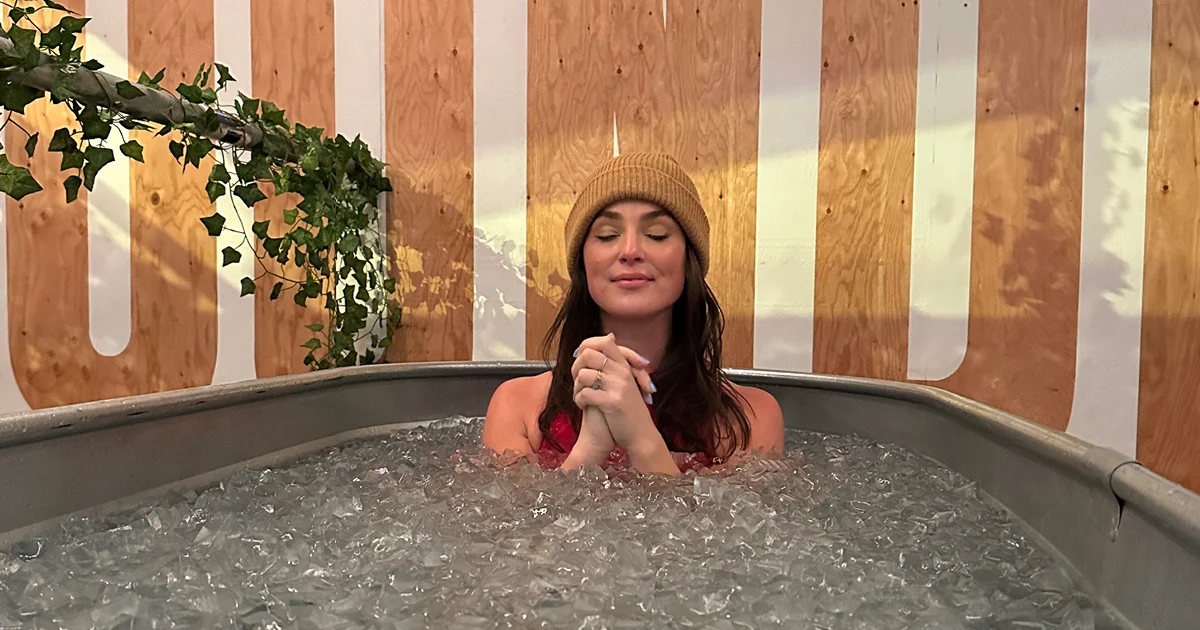
Let’s be honest…the first time someone suggested I should willingly climb into a tub of 50-degree water, my first thought wasn’t, “this sounds relaxing”. It was “what, are you high?!?”
Over the past decade, cold plunges, ice baths, and even cold showers have become one of the most popular recovery tools among athletes, weekend warriors, and people simply trying to feel better. While it may look like another social media trend, there’s actually some solid science behind why so many people are embracing the cold.
Just like lifting weights or sitting in a sauna, cold exposure puts your body under a controlled amount of stress. (The good kind, not the ‘my kids just told me they broke the TV’ kind.) Your body responds by adapting, and that’s where many of the benefits begin.
The moment you step into cold water, your blood vessels constrict to keep warm blood around your vital organs. As your body adjusts, your nervous system kicks into high gear, releasing a surge of norepinephrine– a hormone that helps improve alertness, focus, and mood. It’s basically nature’s cup of coffee…except it makes you question all of your life choices for about the first 30 seconds.
So, What Are the Benefits?
Research suggests regular cold water immersion may:
- Improve Recovery-
- Reduce muscle soreness after tough workouts
- Help athletes recover more quickly between training sessions
- Support healthy mitochondrial function so your cells can produce energy more efficiently
- Support Overall Health-
- Lower cortisol, the body’s primary stress hormone
- Improve insulin sensitivity
- Positively influence certain cardiovascular risk factors
- Boost Mental Well-Being-
- Increase norepinephrine and endorphins, helping improve mood and energy
- Build mental resilience by teaching you to stay calm during controlled discomfort
The Sweet Spot
Here’s some good news: you don’t have to pretend you’re training for an arctic expedition. The majority of research points to 50-55°F as the ideal temperature. That’s cold enough to trigger the body’s beneficial responses without creating unnecessary risk.
And despite what your buddy on Instagram claims, you don’t earn extra points for staying in forever. Most studies show that 3-5 minutes is sufficient to achieve most of the benefits. Beyond 10 minutes, the benefits level off while the risks– such as hypothermia and excessive cooling– begin to increase.
Timing Matters
If you’re trying to recover from a long run, tournament, or conditioning workout, a cold plunge within about 30 minutes can help reduce soreness.
If your goal is building muscle, however, you may want to wait 4-6 hours after lifting weights. Cooling muscles immediately after strength training may slightly reduce the body’s natural muscle-building response.
Looking for an energy boost? Morning is probably your best bet. That surge of norepinephrine can leave you feeling awake, focused, and ready to tackle the day.
A Few Words of Caution
Cold plunges aren’t for everyone. If you have heart disease, uncontrolled high blood pressure, or take heart-related medications, check with your physician before jumping in. Never plunge alone, and if you start feeling numb, dizzy, or uncontrollably cold, it’s time to get out.
Final Thoughts
Like most things in fitness, there’s no magic bullet. A cold plunge won’t erase a poor diet, skipped workouts, or five hours of sleep. But if you’re already training consistently and taking care of the basics, adding a 3-5 minute cold plunge at around 50-55°F a couple of times each week can be another tool to help improve recovery, increase energy, and build a little mental toughness. Besides, once you’ve willingly climbed into freezing water before 7 A.M., the rest of your day doesn’t seem nearly as difficult.